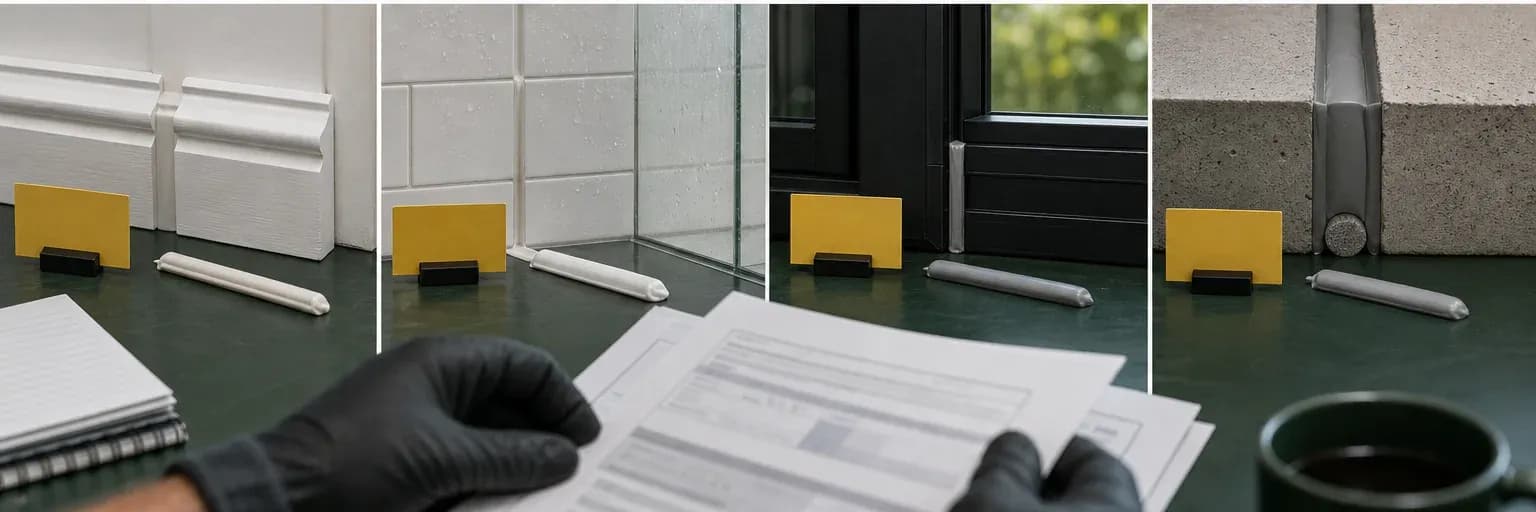
Short answer
What to know first
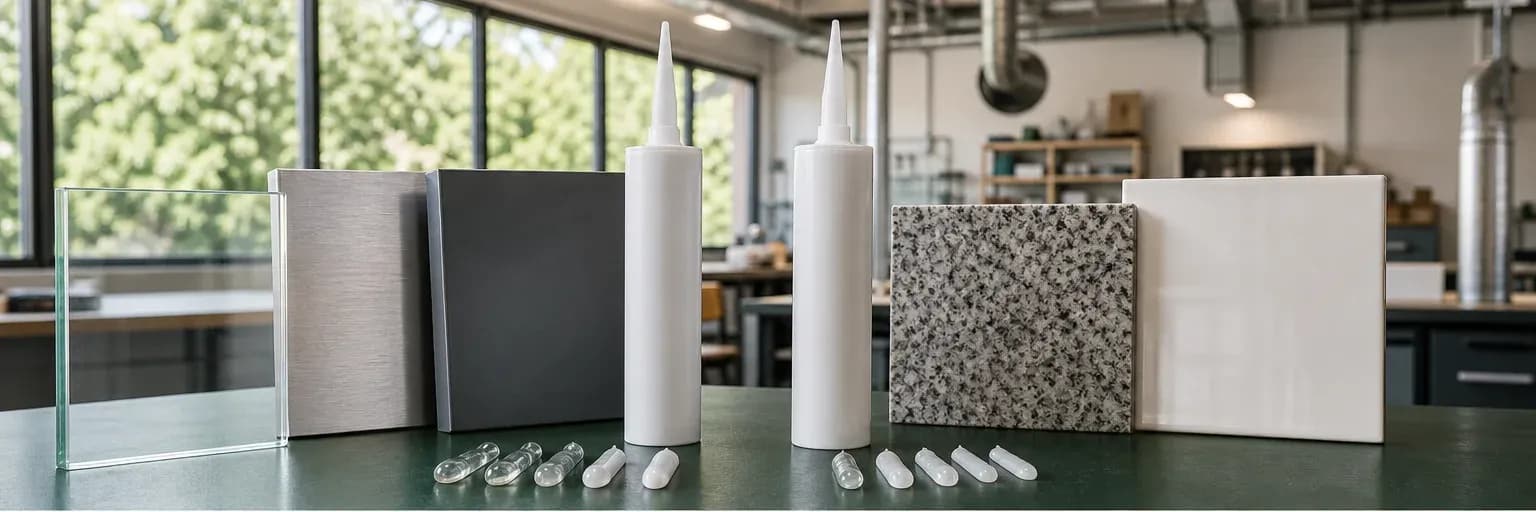
No sealant is “best” without a defined joint. Identify the two substrates, movement, width and depth, water or UV exposure, required finish and any tested-system obligation. Then use the current TDS for suitability and application and the SDS for safe handling. If a condition is missing, unusual or safety-critical, ask for project-specific technical evidence instead of extending a general answer.
Short questions about sealant often hide several technical decisions. “Is it waterproof?” leaves out immersion, movement and the role of the surrounding assembly. “Will it stick?” leaves out the second substrate, coating, contamination and exposure. These answers therefore state the next check rather than promise a universal result.
For a product shortlist, use choose by application and compare the Pereseal range. For exact preparation, curing and safety instructions, open the current technical documents and match them to the product in hand.
Which type of sealant should I use?
Choose from the joint conditions, not the colour of the cartridge. Paintable acrylic is a starting family for suitable interior finishing gaps. Sanitary or weatherproof silicone is commonly reviewed for wet and exterior elastic joints. Polyurethane is a construction-joint option; hybrid products can combine bonding and sealing roles. Each family contains products with different limits.
Name both substrates, expected movement, water and UV exposure, temperature, width and depth, finish and any rating. Then compare intended uses and exclusions in the TDS. The guides on acrylic vs silicone and silicone vs PU vs hybrid show how to narrow the family without turning chemistry into a blanket approval.
When several conditions compete, rank the non-negotiable ones first and document exclusions. A paintable finish should not override wet-service or movement needs, and a convenient colour should not override substrate compatibility. Use the product selector as a shortlist, then verify the exact TDS.

Do I need primer or a compatibility test?
Possibly. Primer requirements depend on product, substrate and exposure. Some products bond to selected surfaces without primer under defined conditions; that does not make them primerless on every porous, coated, weathered or difficult material. Use only the primer and sequence approved for the product. More primer is not automatically safer and an expired open time can undermine the intended bond.
A test patch or project adhesion test is prudent when the substrate, coating or adjacent material is uncertain. Natural stone, plastics, mirrors, coated metals and existing sealants can raise staining, plasticiser migration, corrosion or adhesion questions. The adhesion and compatibility guide distinguishes a small field check from formal project testing and explains what must be recorded.
What is backer rod and is it always required?
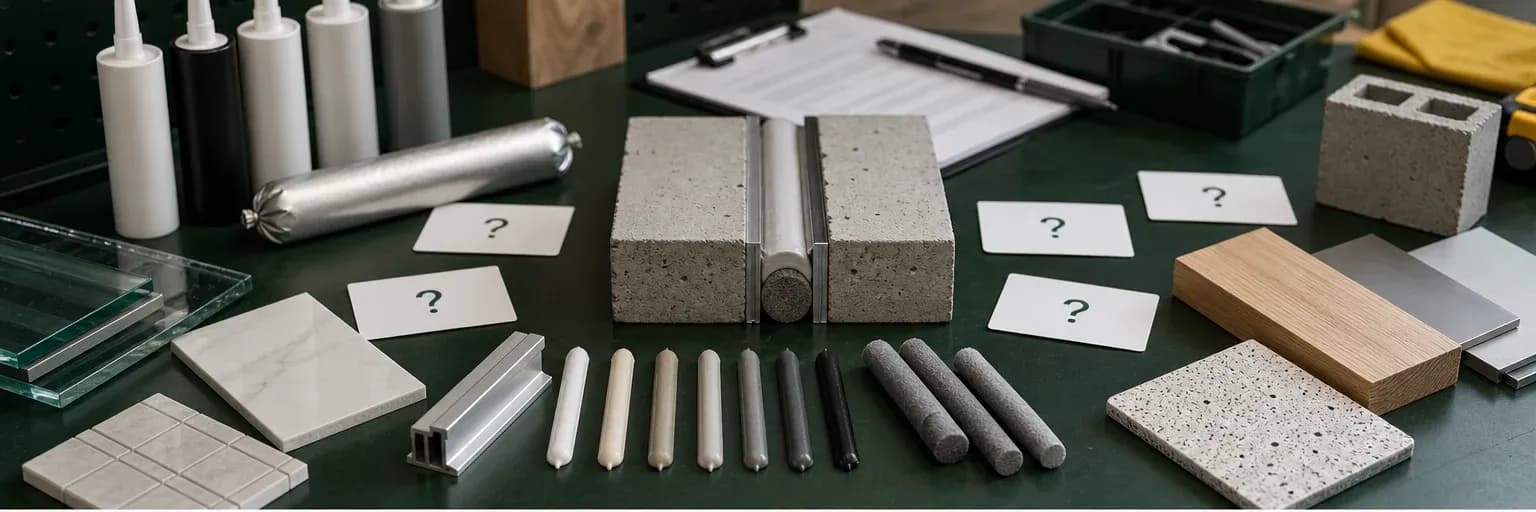
Backer rod is placed behind sealant to control bead depth, support tooling and prevent adhesion to a third surface. Where a shallow joint cannot take a rod, bond-breaker tape can prevent rear adhesion. This lets the sealant stretch and compress between two bonded surfaces instead of forming a deep plug bonded on three sides.
It is not required in every cosmetic gap, and the type and size are not chosen solely to reduce sealant use. Closed- and open-cell products behave differently, while puncture or over-compression can create problems. Follow the product and detail. Read when to use backer rod before filling a movement joint with improvised material.
If the joint drawing specifies a backing material, do not substitute another type without approval.
How long before sealant can be touched, painted or wetted?
Skin time, tack-free time, cure rate and full-depth cure are different. A bead can feel dry at the surface while material below is still reacting. Chemistry, bead dimensions, temperature, humidity and ventilation influence the timeline. A generic “24 hours” is not a safe substitute for the exact product’s instructions or a project-specific requirement.
Find explicit guidance for tooling, masking removal, painting, water contact and loading. If the TDS gives a cure rate under stated conditions, do not convert it into a guarantee under different conditions. The cure-time guide explains the terms and the reason a skinned bead must remain protected.
Add the relevant milestone to the work programme and protect the joint until it is reached. If the site conditions or section differ from the document, seek product-specific guidance; do not infer full cure from a firm skin or assume every following activity has the same release time.
Can sealant be painted and why does paint crack?
Paintable acrylic sealants are intended to accept suitable coatings after sufficient drying. Conventional silicone is generally not painted. Some polyurethane and hybrid products may be paintable under stated conditions. The TDS must confirm the product, and the paint manufacturer must allow the substrate. A test patch is useful because paint and sealant formulations vary.
Cracking may come from painting too early, coating a joint that moves more than the paint film can follow, a bead that shrinks or remains soft, excessive paint thickness or incompatibility. A crack in paint does not automatically mean the sealant beneath has lost adhesion. Use can you paint over sealant to separate coating appearance from joint function.
Is anti-fungal silicone mould-proof and is fire-rated sealant universally rated?
No to both generalisations. Anti-fungal protection can inhibit growth on a cured sanitary bead, but soap film, standing water, poor ventilation and hidden dampness can still support mould. Cleanable surface deposits differ from growth behind a failed edge. Moisture control and joint maintenance remain necessary, and recurring growth may signal a water problem beyond the sealant.
A fire rating applies to the complete tested assembly. Wall or floor type, service, opening, backing, sealant depth, orientation and installation all matter. A cartridge label or TDS summary cannot approve a different arrangement. Read the current report and the fire-rated sealant guide, then obtain approval from the responsible fire professional.
Both claims therefore need scope. For sanitary work, pair the material with drying, ventilation and cleaning. For fire work, retain the complete tested-system evidence and inspection record. The cartridge descriptor alone is not a maintenance plan or an approval for an opening.
What should I do when a joint fails?
Do not immediately cover the defect. Photograph the joint, note age and conditions, and identify whether failure is at an edge, through the bead or in the substrate. Adhesive failure suggests a preparation, compatibility, primer or movement issue; cohesive tearing can point toward strain or cure; substrate breakaway shows the base was weaker than the bond. Several causes can occur together.
Protect the area if water or safety is involved, retain product/batch information and current documents, and ask for technical input on significant work. The joint-failure guide provides a diagnostic framework. Rated, structural, traffic-bearing or widespread failures require the designer or responsible specialist rather than an online repair guess.
Record location, age, exposure, product and failure pattern before cutting it out. Keep a representative sample if investigation may be needed. The distinction between edge separation, a tear through the bead and broken substrate directs different corrective work and prevents blind resealing.
Decision aid
Five details to include with any sealant question
Both surfaces
Name base materials and coatings, not only the room or object; compatibility is decided at the two faces.
What the joint must do
State whether the line is cosmetic, weather, sanitary, movement, bonding or part of a tested system.
Exposure and daily use
Include water, UV, temperature, cleaning, traffic, loading and the earliest time it must return to service.
Joint dimensions and documents
Record width, depth, backing and current TDS/SDS/report revision so advice is tied to the real detail.
Evidence
Primary sources used
- ASTM C1193-25 — Standard Guide for Use of Joint SealantsASTM International
General joint-design, substrate-preparation, backing, primer, installation, environmental and maintenance considerations; explicitly excludes structural glazing.
Accessed 16 July 2026 - ISO 11600:2002 — Classification and requirements for sealantsInternational Organization for Standardization
The principle that building sealants are classified by application and performance characteristics rather than by a generic chemistry name alone.
Accessed 16 July 2026 - Safety Data Sheets — mandatory 16-section formatOccupational Safety and Health Administration
The standard SDS section structure and the distinction between hazard/handling information and product-performance data.
Accessed 16 July 2026 - Fire Code 2023 clause 3.12 — Fire stoppingSingapore Civil Defence Force
Singapore fire-stopping requirements, tested fire resistance, support conditions and the need for an application-appropriate fire-stopping method.
Accessed 16 July 2026
Next step
Bring the joint details when asking for advice
Use the application guide to organise the two surfaces, movement, exposure and documents before asking for a product recommendation.
Choose by application