Short answer
What to know first
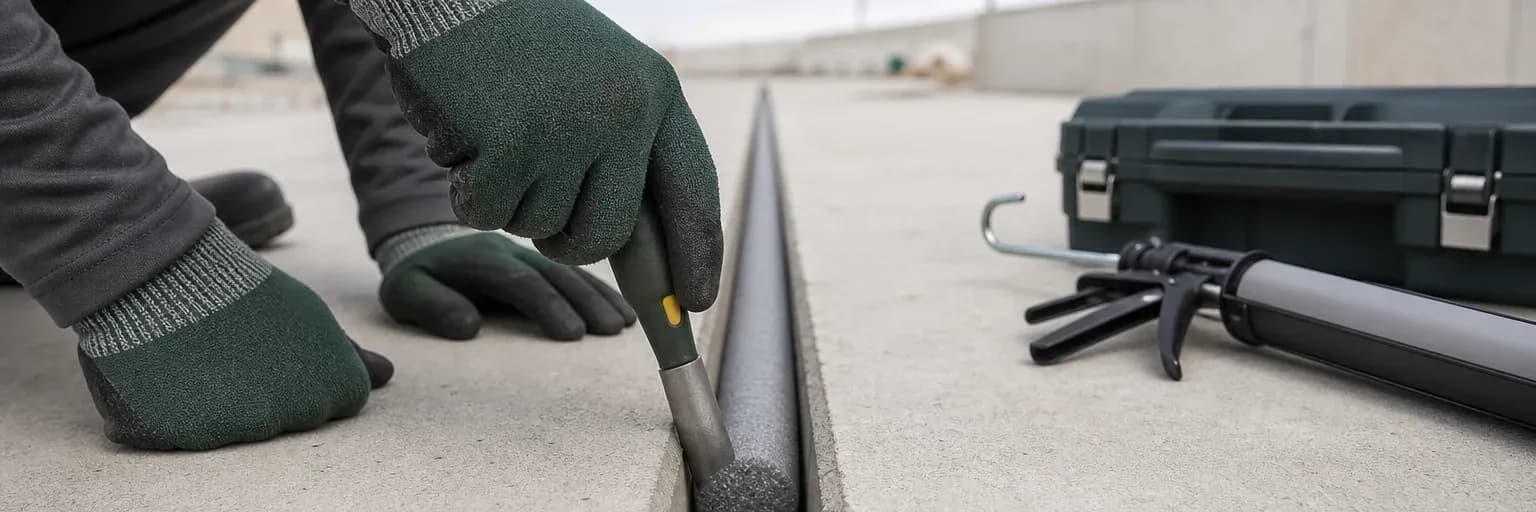
Use backer rod where the designed joint needs controlled sealant depth, support during tooling and prevention of rear adhesion. It is common in movement joints but not automatically required in every cosmetic gap. Select rod material and diameter from the sealant manufacturer or project detail, install it without puncture or contamination, and use approved bond-breaker tape where a shallow joint cannot accept rod. Do not substitute absorbent or improvised packing.
Backer rod is often described as a way to save sealant. Material quantity is secondary. The accessory controls the cross-section, supports tooling and helps a movement joint bond to two opposing faces instead of three. Those functions affect strain, cure and long-term repairability.
Use this guide with joint-design basics and the application selector. The selected sealant’s current TDS and project detail determine rod type, fit, depth and whether a different bond-breaking method is needed.
Backer rod controls bead depth and prevents rear adhesion
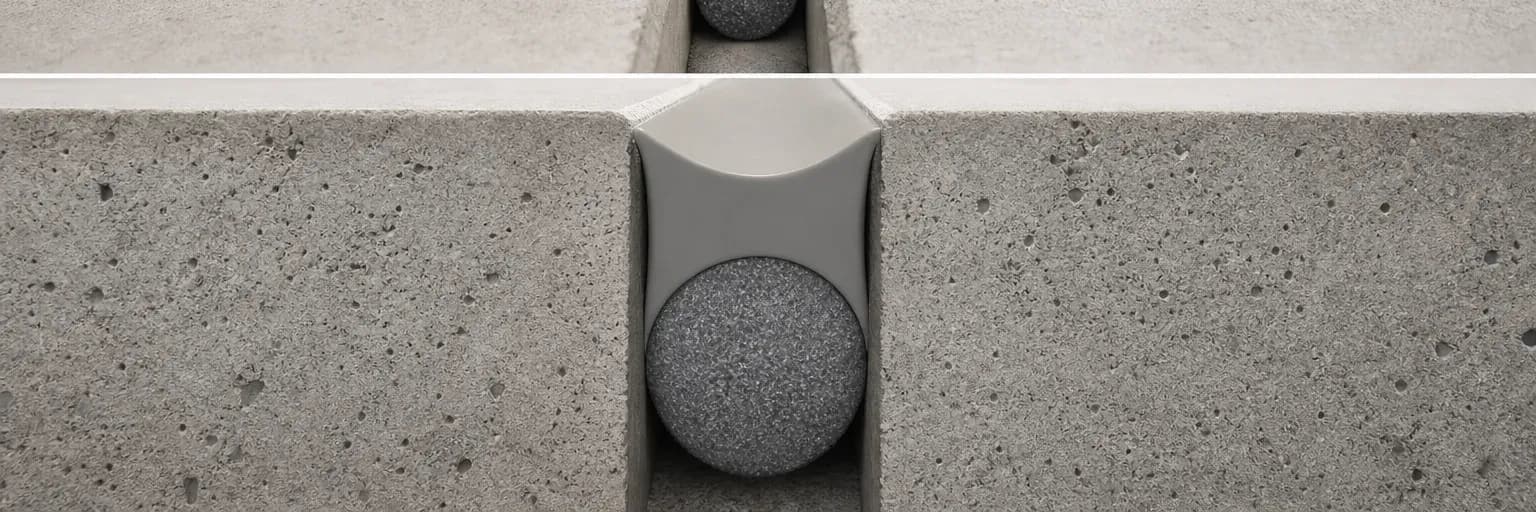
A round compressible rod is placed behind the bead to establish depth and provide a surface to tool against. Many sealants do not bond strongly to compatible polyethylene backing, which helps keep adhesion on the two joint sides. The resulting concave rear and tooled front can form a cross-section that distributes movement more effectively than a deep rectangular plug.
The rod does not make a bad joint acceptable. Width must still cover expected movement, the side faces must be sound and prepared, and the sealant must permit the dimensions and exposure. A rod cannot repair a crumbling edge, stop water arriving behind the joint or turn a cosmetic gap into an engineered movement joint.

Use backing when the joint is deeper than the sealant bead
Movement and perimeter joints are often deeper than the required sealant bead. Filling the entire cavity wastes material, slows curing and can cause three-sided adhesion or an uneven shape. Backer rod sets the back of the bead at the required depth. Follow the product guidance or engineered detail rather than using whichever rod happens to be available.
A narrow surface crack or shallow decorating gap may not accept rod and may not function as a movement joint at all. Do not widen or deepen an unknown joint merely to insert backing. Identify whether it is a connection, movement, control, glazing, sanitary or finishing detail and determine what lies behind it before altering the assembly.
Choose the specified backer rod type
Closed-cell polyethylene rod resists water absorption and is widely used, but puncturing its skin can release gas into fresh sealant and contribute to bubbling. Open-cell backing is more breathable and compressible but has different moisture behaviour. Other specialised shapes and materials exist. Compatibility with the sealant and service environment must be confirmed.
Do not assume a rod sold at the same counter is suitable for every chemistry, temperature or traffic condition. Review the sealant manufacturer’s accessory guidance and project specification. Where water may reach the rear, drainage and the complete weatherproofing detail matter; choosing a non-absorbent rod does not itself stop water ingress.
Availability on site is not a technical selection criterion. Put the backing type and nominal size on the joint schedule, retain its product information with the sealant documents and include it in the representative mock-up. A change in backing can change installation behaviour even when the sealant cartridge remains the same.
Choose a diameter that fits without damage
The rod is normally larger than the opening so compression holds it at a consistent depth, but the required oversize depends on type and manufacturer. An undersized rod can move during gunning and produce variable depth. Excessive compression can distort it, make insertion difficult or affect the joint. Measure along the run because construction tolerances can change the gap.
Use a blunt approved insertion tool that sets depth without puncturing or stretching the surface. Do not roll the rod with a sharp object or coat it in an unapproved lubricant. Butt ends cleanly where required rather than leaving gaps that allow sealant to flow behind. Document unusual transitions and follow the detail at corners or intersections.
Use bond-breaker tape for suitable shallow joints
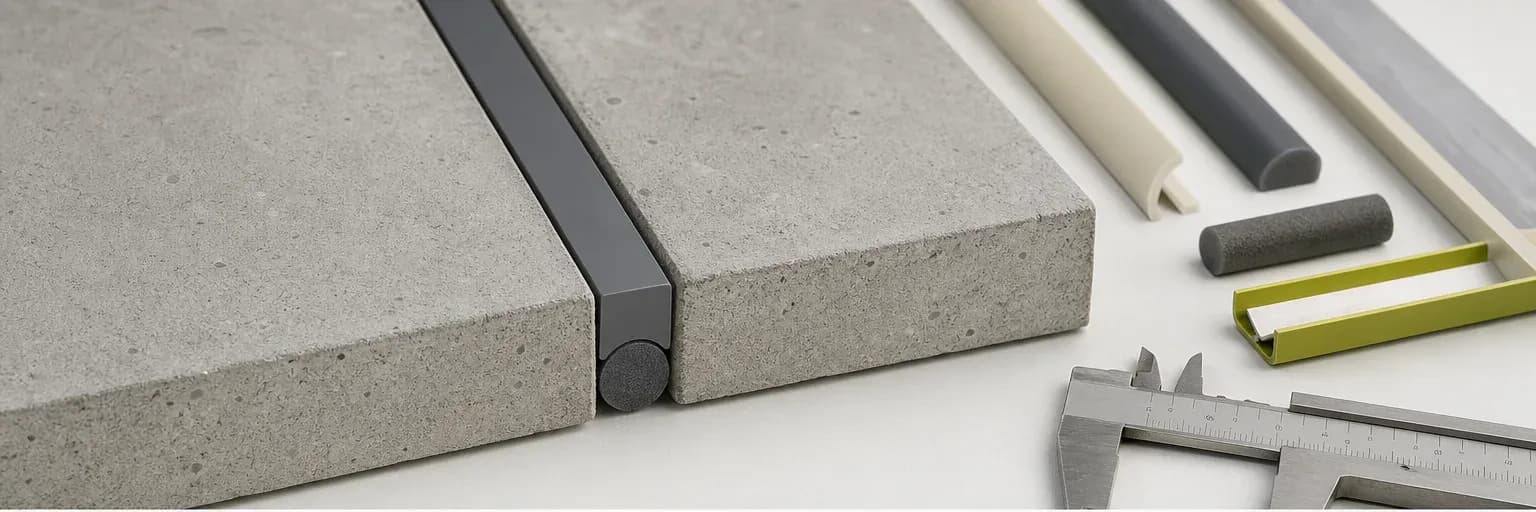
Where the joint is too shallow for a round rod but rear adhesion must be prevented, a compatible bond-breaker tape can cover the back surface. The tape should adhere where intended without contaminating the side faces. Its width and placement must leave the full designed bonding area available. Ordinary masking, packaging or duct tape is not a substitute.
Tape does not support the bead like rod, so application and tooling may behave differently. Confirm that the product/detail permits it. Very shallow or irregular joints can still impose an unsuitable sealant thickness even after rear adhesion is prevented. If minimum dimensions cannot be achieved, the opening or design needs review.
Show tape locations on the detail and keep it off the two intended bonding faces. Wrinkled, displaced or overly wide tape can reduce usable adhesion area. Inspect the prepared joint before gunning because the tape will be concealed as soon as sealant is applied.
Keep the backing clean, dry and compatible
Install backing after preparing the side surfaces in the required sequence, and keep dust, primer, cleaner and water off the rod. Replace any section that becomes wet, dirty, cut or displaced. Apply primer only to the specified bonding surfaces unless the manufacturer says otherwise. Keep the rod at the correct depth while gunning so the nozzle does not push it away.
Tool the sealant to consolidate contact with both sides and shape the exposed surface without thinning the centre excessively. The backing should not remain visible. If it rises, twists or floats, stop and correct the fit rather than covering it. The application guide places these steps in the complete workflow.
Backer rod does not replace waterproofing, insulation or structural support
Backer rod’s function in a sealant joint is limited. It does not replace a waterproofing membrane, firestop backing, thermal insulation or structural packing unless a tested or designed system explicitly assigns that role. Fire-rated joints may require a particular backing material, density, depth and assembly; a generic foam rod can invalidate the detail.
Likewise, horizontal traffic, immersion and high-temperature joints need system-specific accessories. If the joint has a rating or safety function, use only the components and dimensions in the current test or approval. For ordinary construction work, retain the rod specification with the sealant record so inspection and future repair can reproduce the intended cross-section.
If the cavity also needs fire stopping, thermal insulation, drainage or an air barrier, design those functions as coordinated components. Confirm that their materials and positions are compatible with the joint seal. One foam rod cannot be assigned several unverified duties simply because it occupies the opening.
Decision aid
Choose the right backing
Deep movement or perimeter joint
Use the specified compatible rod to control depth and rear adhesion after confirming the product’s dimensional limits.
Shallow joint where rear adhesion is possible
Review an approved bond-breaker tape, ensuring minimum sealant thickness and side-bond area remain achievable.
Small cosmetic gap
Do not insert rod automatically; confirm the gap’s function and follow the decorating product’s application limits.
Fire-rated or specialist joint
Use only the backing and dimensions in the qualified system or project detail; generic foam is not evidence.
Evidence
Primary sources used
- ASTM C1193-25 — Standard Guide for Use of Joint SealantsASTM International
General joint-design, substrate-preparation, backing, primer, installation, environmental and maintenance considerations; explicitly excludes structural glazing.
Accessed 16 July 2026 - Joint sealants for building and civil engineeringSika
General explanation of joint dimensioning, backing rods, three-sided adhesion, substrate condition and application workflow; not Pereseal-specific evidence.
Accessed 16 July 2026 - FAQ and technical bulletinsBostik Singapore
General industry guidance on backing rods, joint dimensions, primers, paint cracking, inspection and sealant terminology; not evidence for Pereseal product performance.
Accessed 16 July 2026
Next step
Match the backing to the joint design
Bring the joint width, depth, movement, exposure and selected product document to the construction-joint review.
Review construction joints