Short answer
What to know first
There is no universal sealant cure time. Working time, skin time, tack-free time, cure rate and full-depth cure describe different stages. Sealant type, bead depth, temperature, humidity, airflow and substrate can change them. Use the current TDS to find when the exact product can be exposed to water, painted, moved or loaded. A dry-feeling surface is not proof of full cure.
“How long does it take to dry?” usually means “when can this joint return to service?” Those are not the same question. An installer needs working and tooling time; a painter needs the stated paint condition; a bathroom user needs the water-contact requirement; a bonded component may need support until a specified cure or strength is reached.
The correct timing depends on the exact product and bead size. Open the technical library and match the current TDS to the pack. The application guide explains how to protect the joint while it cures; one generic waiting period cannot replace the product instructions.
Know which curing stage matters
Working or tooling time is the period in which fresh material can be placed and finished as intended. Skin time describes formation of a surface film. Tack-free time describes a surface response under a stated test. Cure rate often reports depth developed over a period under specified conditions. Full cure refers to the whole designed section reaching the intended cured state, not simply becoming dry to touch.
A product may publish only some of these values. Do not invent the missing milestone by substituting another. “Skins in 15 minutes” does not mean water-ready in 15 minutes. “Cures 2 mm per day” is not automatically a linear schedule for a 10 mm deep joint under different conditions. Ask the manufacturer when the TDS does not explicitly address the service requirement.

Sealant type affects how it cures
Many one-component silicones, polyurethanes and hybrid polymers react with atmospheric moisture and cure inward from exposed surfaces. Water-based acrylics primarily dry as water leaves the material, though formulation and later cure behaviour vary. Two-component products rely on mixing and a chemical reaction. Each mechanism responds differently to bead geometry, humidity, temperature and restricted exposure.
Do not try to accelerate one system with a method intended for another. Added water, heat, solvent or airflow can create surface defects, trapped moisture or unsafe conditions. Use only controls stated by the manufacturer. The SDS covers handling and hazards; the TDS covers the application environment. If cure is essential to a load or rated function, the project procedure should define verification rather than rely on elapsed time alone.
Deeper beads take longer to cure
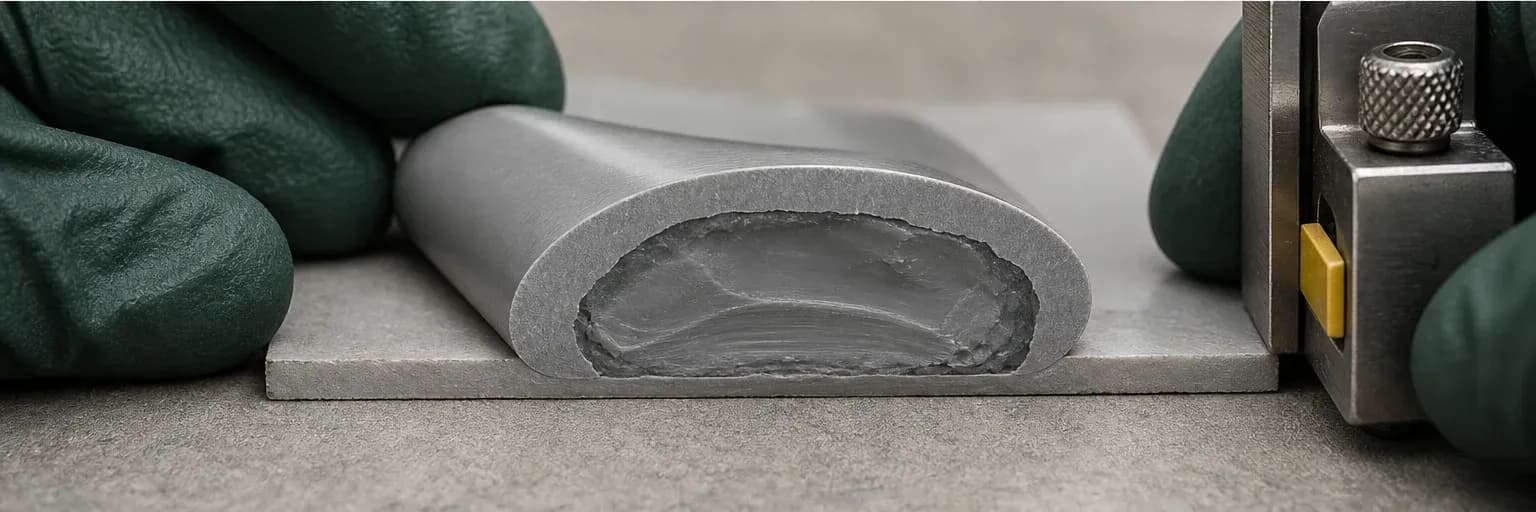
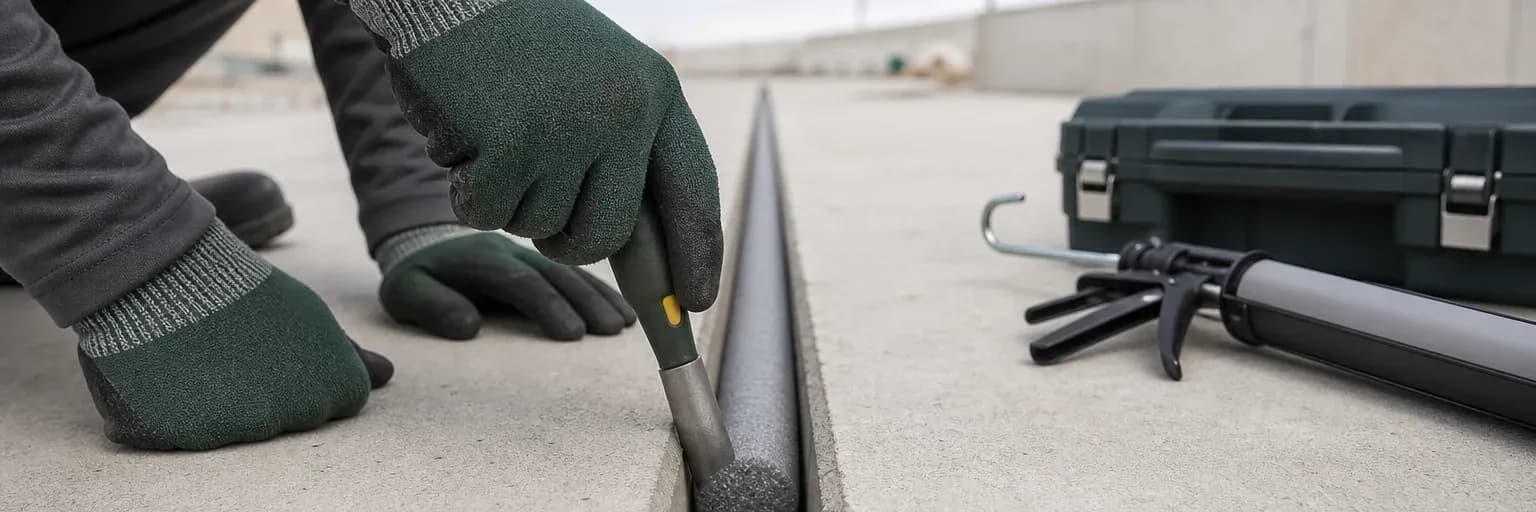
A deeper moisture-curing bead takes longer for cure to reach the centre. An excessively thick plug can remain soft long after the surface appears finished. Joint design therefore affects schedule as well as movement. Backer rod or bond-breaker material establishes a controlled cross-section and avoids filling an uncontrolled cavity with sealant. The permitted dimensions come from the selected product and detail.
A bead bonded or enclosed on several sides may receive moisture differently from the specimen used for a published cure rate. Bonding applications behind large impermeable panels can be particularly restricted. Follow the product’s bead spacing, support and cure instructions. The backer rod guide and joint-design basics show why more material is not automatically more reliable.
Temperature, humidity and airflow affect curing
Published skin and cure values normally state laboratory temperature and relative humidity. Cooler conditions often slow chemical reaction and evaporation. Humidity can support moisture-curing products but delay water-based drying; very dry or restricted conditions can slow moisture cure. These are general tendencies, not correction factors that allow an exact project time to be calculated from one table value.
Measure or record site conditions for significant work and keep them within the TDS range. Outdoor joints can experience rain, condensation and large surface-temperature changes even when air conditions appear acceptable. Interior wet rooms may be humid while the substrate remains contaminated or damp. A product applied outside its limits should not be declared cured merely because extra time passed.
Set separate wait times for water, paint, movement and load
Water can wash, discolour or damage sealant before it is ready. Paint can trap moisture or curing by-products and may crack if applied too soon. Early movement can stretch a weak bead, while cleaning can damage the surface. Check the TDS or system instructions for the wait time that applies to each activity.
Bonding adds load and support. Initial grab holds parts differently from developed cured strength, and heavy or overhead components may need mechanical restraint throughout cure or permanently. Fire-stopping and other tested systems have installation and inspection requirements beyond surface cure. Never treat “touch dry” as a general release for use.
Write the required milestone beside each work activity in the programme and assign who confirms it. This prevents a crew from treating a dry-looking surface as permission for every following trade, and it gives the supervisor a clear hold point when weather or bead dimensions differ from the assumptions.
Watch for incomplete or blocked curing
A soft centre after the expected period, persistent tack, unusual odour, wrinkling, bubbles or material transfer can indicate incomplete cure, excessive depth, contamination, expired product or incompatible adjacent materials. Do not cover the symptom with paint or another sealant. Photograph it, retain product and batch details, and compare the actual bead and conditions with the current documents.
Some interactions inhibit or disrupt cure even when temperature and time appear correct. Existing sealants, bitumen, plasticisers, cleaners, coatings and moisture can be involved. The failure should be assessed before removal destroys the evidence. Use the joint-failure guide and seek technical support for significant, repeated or safety-relevant cases.
Record the product, batch, substrate, primer, bead dimensions, application time and ambient conditions before disturbing a suspect area. Those facts help separate a local contamination problem from an unrealistic schedule, unusually deep section or broader batch and storage concern.
Plan around the product data, not the deadline
Work backwards from the earliest required water contact, paint, movement or loading. Add time for preparation and substrate drying, the product’s stated condition under expected site conditions, inspection and contingency. If the available shutdown is shorter, change the programme or use a specifically documented system—not an unsupported assumption that the same product will cure faster.
Record the application date, time, conditions, product and bead size on controlled work. Mark and protect the joint so another trade does not disturb it. Return the area to use only when the agreed requirement has been met. For a bathroom, this may mean arranging another place to wash; for a project joint, it may require an inspection. Protecting the sealant while it cures is part of the installation.
Decision aid
Check when the joint is ready
Tool the bead or remove masking
Use the product’s working and skin-time instructions so the bead is consolidated before the surface becomes unworkable.
Paint the joint or expose it to water
Find an explicit product instruction for that service; do not substitute tack-free feel or another product’s timetable.
Move the joint or load the bond
Follow project and manufacturer cure/strength criteria, maintaining temporary support or protection for the required period.
The sealant is not curing normally
Preserve evidence and investigate depth, conditions, batch, contamination and compatibility before covering or repairing.
Evidence
Primary sources used
- ASTM C1193-25 — Standard Guide for Use of Joint SealantsASTM International
General joint-design, substrate-preparation, backing, primer, installation, environmental and maintenance considerations; explicitly excludes structural glazing.
Accessed 16 July 2026 - FAQ and technical bulletinsBostik Singapore
General industry guidance on backing rods, joint dimensions, primers, paint cracking, inspection and sealant terminology; not evidence for Pereseal product performance.
Accessed 16 July 2026 - Safety Data Sheets — mandatory 16-section formatOccupational Safety and Health Administration
The standard SDS section structure and the distinction between hazard/handling information and product-performance data.
Accessed 16 July 2026
Next step
Check the current TDS for timing
Match the document to the exact pack, bead and site conditions before scheduling water, paint, movement or loading.
Open technical documents