Technical basics

Neutral-cure vs acetoxy silicone: what changes?

Compare neutral-cure and acetoxy silicone by cure by-product, substrates, odour, corrosion risk, weather exposure and product limitations.

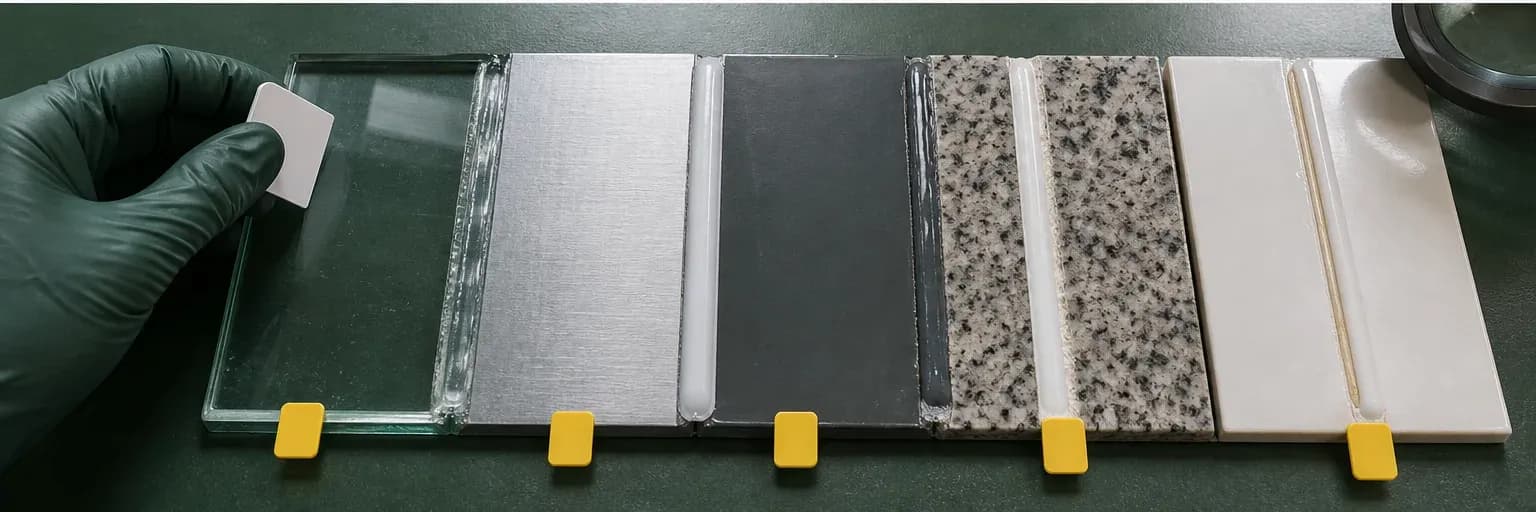
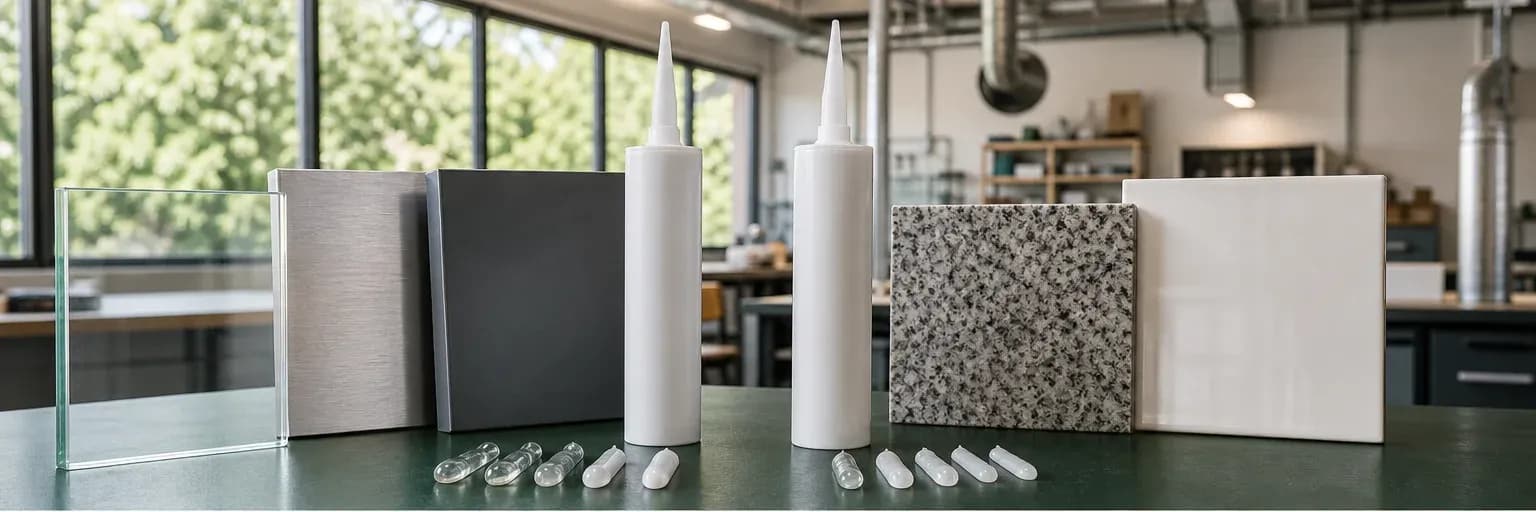
Two silicone joint samples beside glass, coated metal and masonry substrate pieces in a materials workspace
Cure family changes the first compatibility questions, but the actual product and two bonding surfaces still decide the result.

Short answer

What to know first

Acetoxy silicone releases an acetic-acid by-product while curing and is commonly selected for suitable glass, ceramic and other non-porous materials. Neutral-cure silicone releases a different, less acidic by-product and is often considered for a broader range of construction surfaces and sensitive metals or coatings. Neither label guarantees adhesion or compatibility; confirm the exact substrates, exposure and current TDS.

The familiar vinegar-like odour of some silicone is a clue to acetoxy cure, while many construction and sanitary silicones use a neutral-cure system. The distinction matters because the curing by-products and formulation influence which surfaces and environments should be considered. It does not divide products into “basic” and “premium,” nor does it describe every performance property.

First identify the joint through the glazing, exterior or wet-area application page. Then check the exact Pereseal product and current TDS.

Cure type determines the by-product

One-component silicone generally reacts with moisture from the air and cures from the exposed surface inward. An acetoxy system releases acetic acid as a curing by-product, producing the recognisable sharp odour. Neutral systems use other crosslinking chemistry and release different by-products. Ventilation, handling and cure conditions still come from the product SDS and TDS rather than from the family name.

The by-product is only one part of a complete formulation. Fillers, adhesion promoters, plasticisers, fungicides and other ingredients influence application and service behaviour. Do not assume two neutral-cure products or two acetoxy products are interchangeable. A sanitary neutral silicone and a weatherproof neutral silicone may target different exposures, movement classes and substrates.

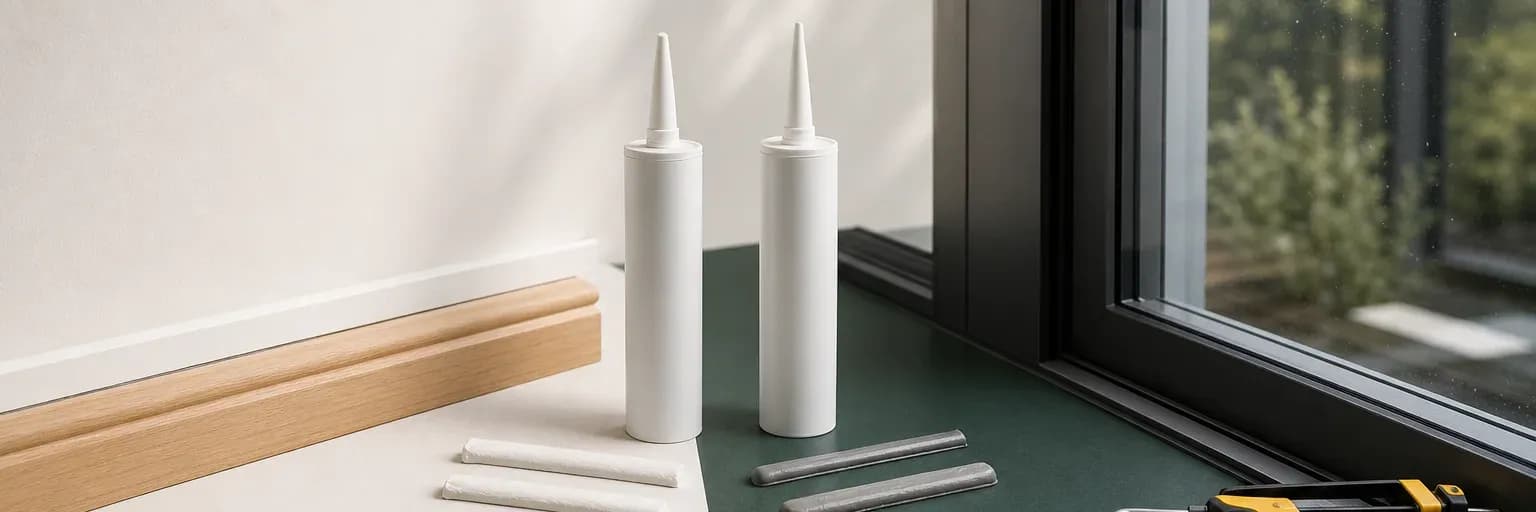
Glass, ceramic, coated aluminium, masonry and plastic samples arranged for silicone compatibility review
Naming the exact surfaces is more useful than asking whether one cure family is universally better; coatings and plastics need to be included.

Acetoxy silicone works with a narrower range of materials

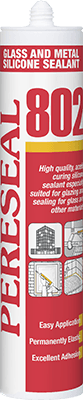
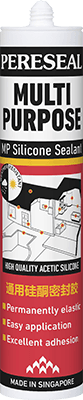
Acetoxy silicone is widely used on suitable glass, glazed ceramic and selected non-porous surfaces. It often cures quickly and forms a durable flexible seal when the product, surface and exposure are compatible. Check Pereseal MP for general-purpose acetoxy work and Pereseal 802 for suitable glazing and non-porous construction joints that need higher performance.

The acidic curing environment can make acetoxy products unsuitable for certain sensitive metals, alkaline or porous materials, natural stone, coatings, mirrors or plastics. The actual exclusion list varies. Never turn “good for glass” into structural-glazing approval, insulated-glass compatibility or suitability for every frame. Those systems require specifically qualified products and design evidence.

Include every adjacent material in the review, not just the two obvious bond faces. Runoff, vapour and uncured contact can involve coatings, mirrors, metals, stone, gaskets and cleaners. A suitable glass edge does not prove that the complete assembly is suitable.

Neutral-cure silicone is often suitable for more construction materials

Neutral-cure silicone is commonly considered for construction perimeters, coated or sensitive surfaces and sanitary joints where an acetoxy by-product may be unsuitable. Pereseal N is the range’s weatherproof neutral-cure silicone, while Pereseal AF is for suitable sanitary joints. Their intended uses differ even though both are neutral cure.

“Neutral” does not mean chemically inert, odour-free, universally non-staining or automatically compatible with every plastic, paint, stone or existing sealant. Preliminary adhesion and compatibility checks may still be required. Read the limitation, primer and test-patch instructions in the current TDS and include any coating or membrane on the substrate list.

“Neutral” also covers more than one curing system and does not guarantee identical behaviour between products. Verify the named formulation, substrate guidance and limitations on the current TDS, then test representative finishes when the appearance or consequence of failure warrants it.

Odour does not tell you how a sealant performs

A strong acidic odour can identify an acetoxy curing by-product, but odour intensity does not measure cure depth, adhesion, movement capability or long-term weathering. Likewise, a mild-smelling neutral product is not proof that a joint is ready for occupancy, water, paint or loading. Use ventilation and handling measures from the SDS regardless of subjective smell.

Do not use smell to identify unknown cured sealant or decide whether new material can be applied over it. Once cured, the original chemistry and contamination may be unclear. If compatibility between old and new material matters, removal to suitable sound bonding faces or a manufacturer-approved test is safer than guessing from appearance.

Use ventilation and exposure controls from the SDS while the material cures, regardless of whether the smell seems mild. If an unexpected odour, irritation or cure condition occurs, stop and check product identity, storage, batch and application conditions instead of diagnosing chemistry by smell.

Different milestones occur at different times

Compare service requirements after choosing a cure type

After cure chemistry narrows the candidates, compare movement classification, modulus, UV and weather exposure, sanitary protection, temperature range, immersion limits, paintability, colour and joint geometry. These are product properties, not automatic consequences of neutral or acetoxy cure. A neutral sanitary product should not be assumed to replace a neutral façade product, or the reverse.

Also consider work sequence. Skin time, cure rate, application temperature and primer instructions affect installation. The guide on acrylic vs silicone provides the wider chemistry decision, while adhesion and compatibility testing explains how uncertainty should be checked before full application.

Compare water, UV, movement, temperature, cleaning, paint, staining risk and required approvals. Remove any product that misses an essential requirement before comparing convenience or price. Cure type is only one part of the choice.

Compare the current Pereseal silicones

For suitable sanitary interfaces, begin with AF; for suitable exterior weatherproofing and sensitive construction perimeters, begin with N. For routine suitable non-porous sealing, review MP; for appropriate glass, metal and glazing top-seal work, review 802. Each page links its TDS, SDS and supporting documents so the actual limitations remain visible.

Do not infer colour, pack size, formulation, rating or project suitability from this comparison. Check the current product page and TDS. If the two surfaces, exposure or joint function fall outside a clearly documented use, ask for technical advice before purchasing or applying.

For each candidate, open the matching current document and confirm the packaging code in hand. Record any unsupported substrate, exposure or performance assumption for technical review. Do not transfer a claim from one Pereseal silicone to another because their cartridges share a brand or similar colour.

Match each question to its evidence

Decision aid

Where each cure type fits

Suitable glass or glazed non-porous joint

An acetoxy silicone may be suitable, but confirm the frames, coatings, plastics, exposure and whether the work is only a weather or top seal.

Sensitive metal, coating or broader construction surface

Review a neutral-cure construction silicone and carry out the product-specific adhesion or compatibility checks required by its TDS.

Bathroom or kitchen sanitary joint

Review a sanitary formulation such as Pereseal AF; neutral cure alone does not provide anti-fungal positioning or wet-area suitability.

Unknown surface or specialist system

Do not select by cure name. Obtain current compatibility evidence for both surfaces and the complete structural, glazing or waterproofing detail.

Evidence

Primary sources used

  1. ASTM C1193-25 — Standard Guide for Use of Joint SealantsASTM International

    General joint-design, substrate-preparation, backing, primer, installation, environmental and maintenance considerations; explicitly excludes structural glazing.

    Accessed 16 July 2026
  2. ISO 11600:2002 — Classification and requirements for sealantsInternational Organization for Standardization

    The principle that building sealants are classified by application and performance characteristics rather than by a generic chemistry name alone.

    Accessed 16 July 2026
  3. Joint sealants for building and civil engineeringSika

    General explanation of joint dimensioning, backing rods, three-sided adhesion, substrate condition and application workflow; not Pereseal-specific evidence.

    Accessed 16 July 2026

Next step

Match the cure type to the whole joint

Compare the four current silicones, then check both surfaces and all limitations in the product TDS.

Compare silicone products

Related documents

Read the product evidence beside the guide

Technical data sheetEN

Pereseal AF TDS

Technical datasheet for Pereseal AF anti-fungal silicone.

Technical data sheetEN

Pereseal N TDS

Technical datasheet for Pereseal N neutral cure silicone.

Technical data sheetEN

Pereseal 802 TDS

Technical datasheet for Pereseal 802 silicone sealant.

Technical data sheetEN

Pereseal MP TDS

Technical datasheet for Pereseal MP multi-purpose silicone sealant.

Relevant starting points

Products mentioned in this guide

These are selection starting points. Confirm suitability in current product documentation.

Anti-fungal silicone

Pereseal AF Anti-Fungal Bathroom & Kitchen Silicone Sealant

Product details
Neutral silicone

Pereseal N Weatherproof Neutral Seal Silicone

Product details
Glass and metal silicone

Pereseal 802 High Performance Silicone Sealant

Product details
Multi-purpose silicone

Pereseal MP Multi-Purpose Silicone Sealant

Product details

Keep learning

Related evidence-led guides