Short answer
What to know first
Store unopened sealant in the temperature and position stated by its current TDS/SDS, protected from direct sun, water, puncture and excessive heat. Keep the product name, batch and date legible. An expiry or shelf-life date is not safely overruled by appearance; a damaged, leaking, hardened, separated or unidentifiable pack should not be applied. Ask the manufacturer about any dated stock, and do not use uncertain material in critical work.
Shelf life describes the period during which an unopened product is expected to remain within specification when stored under stated conditions. It is not a guarantee after prolonged heat, damaged packaging or unknown handling. In Singapore, vehicles, containers and unconditioned stores can become far hotter than ordinary room conditions, making storage discipline especially important.
Check the exact product documents and use the product page to confirm the product name. This guide explains storage controls and warning signs, but it does not extend the stated shelf life of dated material.
Check shelf life and storage conditions together
Find the shelf-life period, reference date and specified storage temperature in the current TDS, SDS or label. Determine whether the date is manufacture, best-before or expiry and how batch coding is read. A statement such as “12 months when stored at 5–25°C” depends on both time and temperature; the calendar alone cannot describe a cartridge kept for weeks in excessive heat.
If the documents disagree or the code is unclear, ask the supplier with photographs and batch details. Do not relabel stock with an estimated date. For controlled projects, record delivery, batch, expiry and storage location so material can be traced before installation. First-in, first-out rotation helps only when the earliest stock has also remained within its conditions.

Protect packs from heat, sun, water and damage
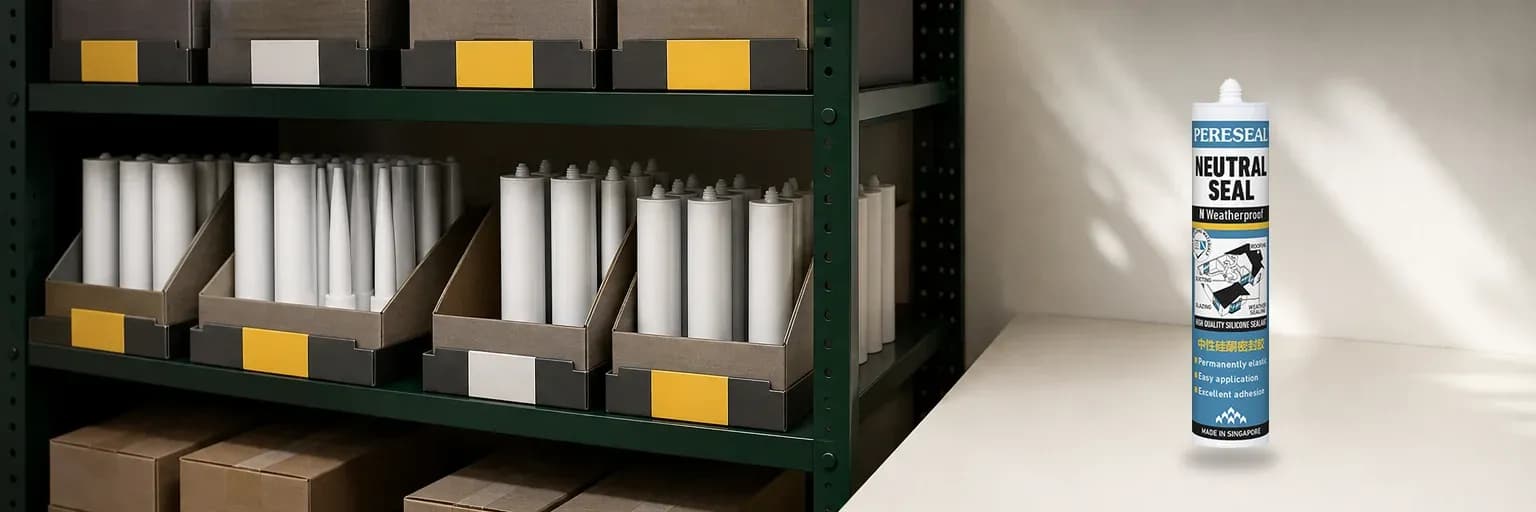
Store material in a dry shaded location within the manufacturer’s temperature range, away from heaters, roofs exposed to sun and vehicle interiors. Do not allow cartons to stand in water or where condensation can damage labels. Keep stock away from ignition or incompatible materials as the SDS requires. Temperature monitoring may be appropriate for project or bulk storage.
Protect cartridges from crushed barrels, bent plungers and broken nozzle seals; protect sausages from puncture and abrasion. Stack only as packaging permits. A pack that leaks or admits air/moisture may begin curing or lose components. Moving it into a cool room later does not reverse the exposure. Segregate questionable stock until the supplier determines disposition.
Inspect the pack before loading it
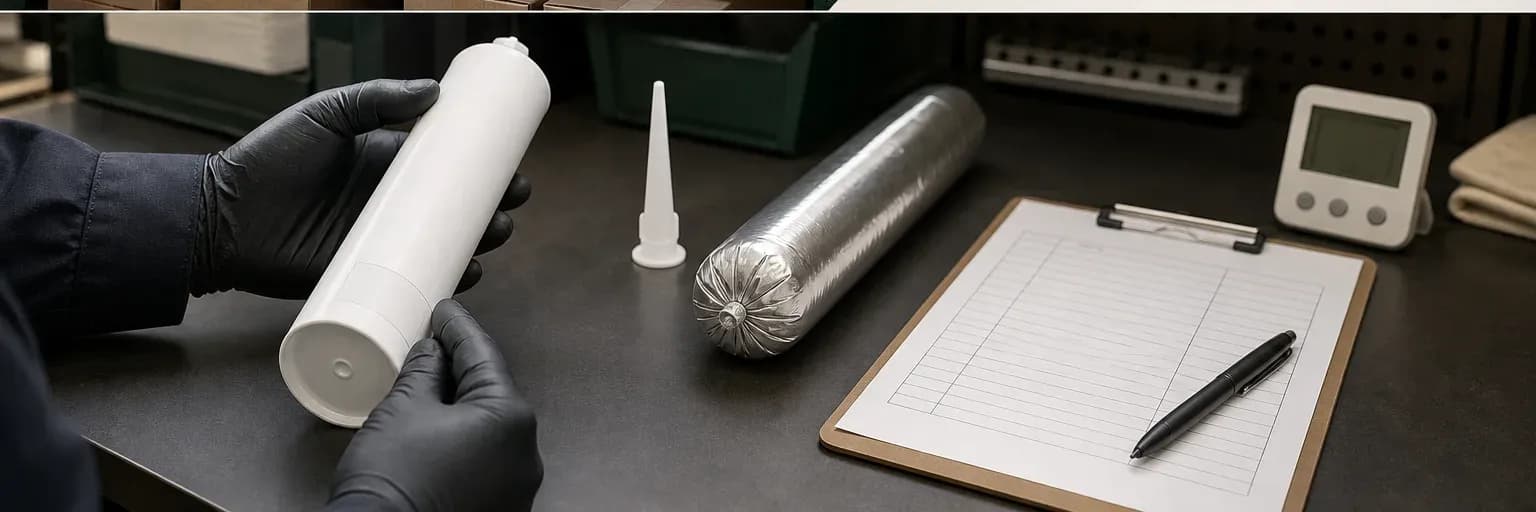
Confirm product, colour, batch and date against the work order and approved documents. Look for swelling, collapse, rust, puncture, leakage, a displaced plunger, broken seal or material hardened in the nozzle. Check that labels and hazard information are present. Do not cut open an abnormal pressurised or swollen package to “see if it is fine.” Follow the SDS and supplier instructions.
On significant work, quarantine a whole batch when repeated abnormalities appear rather than testing each pack during installation. Retain samples and photographs as the quality plan requires. A smooth bead from the first few centimetres is not proof that cure, adhesion and long-term properties remain within specification after improper storage.
A squeeze test cannot extend the expiry date
Expired sealant may still extrude, skin or appear normal while other properties have changed. Conversely, a cold but in-date pack can temporarily feel stiff. Site observations cannot reproduce the full specification tests for cure, adhesion, movement or durability. Only the manufacturer can advise whether formal retesting, extension or disposal is available for a batch.
Do not use uncertain stock in fire, glazing, façade, immersion, traffic, overhead bonding or other consequential details. The cost of replacement material is small compared with removing installed failed sealant or losing traceability. If written extension evidence is provided, keep it with the batch and project records and follow any revised conditions.
Where the project permits a manufacturer-reviewed trial, agree on the checks before opening the stock and keep the result with the batch record. An informal bead on cardboard does not reproduce the surface, joint shape, exposure or observation period and cannot justify using expired material.
Use opened packs promptly
Once opened, moisture-curing products begin reacting at the exposed end. A cap, cured plug or storage method may reduce waste only where the manufacturer permits it; it does not restore the original unopened shelf life. Mark the opening date and product, keep the pack within stated conditions and inspect before any reuse. Never rely on an unlabelled partly used tube.
Material beneath a cured plug can still be contaminated or partially cured. If extrusion is lumpy, separated, unusually stiff or inconsistent, stop. Do not mix it with fresh sealant in the same joint. For controlled work, use new traceable packs and dispose of leftovers according to the SDS and local requirements rather than carrying uncertainty to the next site.
Warm cold stock only as instructed
Sealant stored within its allowed cold range may need time to reach application temperature. Move it to the permitted environment and allow gradual conditioning as the manufacturer states. Do not use open flames, hot water, uncontrolled heaters or direct sun. Uneven heating can damage packaging, change viscosity or create pressure and introduces serious safety risks.
The substrate and air must also fall within application limits. A warm cartridge applied to a cold, wet or condensing surface does not solve the site condition. Record actual temperatures where required, and postpone work outside the range. The application guide treats product, substrate and environment as one readiness check.
Move material into the permitted environment early enough for its temperature to equalise naturally, keeping packs sealed and dry. Record the conditioning location and time when quality requirements justify it. Never place cartridges against heaters, in hot water or under direct sun to accelerate the process.
Keep batch records
Record the receipt date, supplier, product, colour, batch, expiry date, quantity, storage location and issue-to-site details where the work requires it. Rotate stock and inspect the store. If a curing or adhesion problem occurs, these records help separate a local preparation issue from a storage or batch problem and make it easier to isolate affected material.
For Pereseal stock, contact the team with clear photographs of the pack and batch code when the date or condition is uncertain. Do not decide by smell or extrusion alone. Keep the pack and a relevant joint sample if the problem needs investigation.
Tie delivery records to storage zones and installation lots so affected work can be found without condemning unrelated material. If a cure or adhesion concern arises, quarantine the remaining batch and preserve unopened samples, documents and conditions for the manufacturer or project investigator.
Decision aid
Use, check or quarantine?
In date and stored correctly
Inspect package integrity and application condition, then use under the current TDS/SDS and project controls.
The date or storage history is uncertain
Quarantine the material and ask the supplier/manufacturer; do not infer suitability from appearance or extrusion.
Damaged, leaking, swollen or abnormal
Do not open or apply it; segregate and handle/dispose according to the SDS and supplier instructions.
Opened leftover pack
Use only within an approved short-term method and traceable condition; choose a fresh pack for controlled or critical work.
Evidence
Primary sources used
- Safety Data Sheets — mandatory 16-section formatOccupational Safety and Health Administration
The standard SDS section structure and the distinction between hazard/handling information and product-performance data.
Accessed 16 July 2026 - FAQ and technical bulletinsBostik Singapore
General industry guidance on backing rods, joint dimensions, primers, paint cracking, inspection and sealant terminology; not evidence for Pereseal product performance.
Accessed 16 July 2026 - ASTM C1193-25 — Standard Guide for Use of Joint SealantsASTM International
General joint-design, substrate-preparation, backing, primer, installation, environmental and maintenance considerations; explicitly excludes structural glazing.
Accessed 16 July 2026
Next step
Check the current product and batch records
Use the technical library for storage and shelf-life instructions, and contact Pereseal with pack photographs when status is uncertain.
Browse technical documents