
Technical basics

Sealant vs caulk vs adhesive: what is the difference?

Understand how the terms overlap, how movement and load separate sealing from bonding, and why the exact product document matters more than the label.

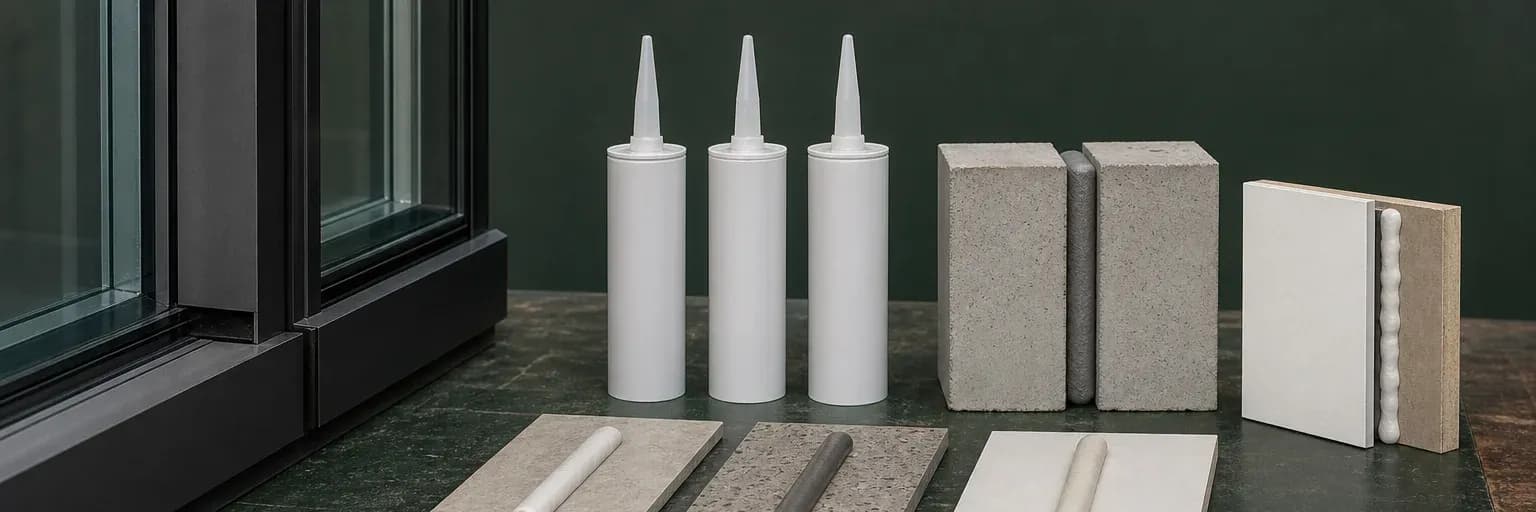
Workshop samples showing a tooled interior caulk joint, a flexible perimeter seal and a temporarily supported bonded panel
The terms become clearer when the functions are separated: filling a finishing gap, sealing movement and transferring load are different tasks.

Short answer

What to know first

“Caulk” commonly describes easy-to-apply gap-filling material, often paintable acrylic for interior finishing; “sealant” emphasises a durable joint that controls air, water or contaminants while accommodating defined movement; “adhesive” transfers load between materials. Market language overlaps, and hybrid products may do more than one job. Select from the required function, movement, substrates, exposure, load and current TDS—not from the word on the shelf alone.

Hardware shelves and specifications use “caulk,” “sealant” and “adhesive sealant” inconsistently. In some markets caulk is a broad verb for applying any cartridge product; elsewhere it means paintable acrylic. The safest interpretation is functional: what must the installed material do, and what evidence supports that job?

Use the Pereseal product comparison and application selector after defining the function. This guide organises terminology; exact movement, adhesion, load, paint, cure and exposure limits remain in the current product document.

Caulk usually means a material for filling and finishing gaps

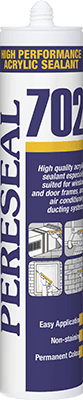
In decorating work, caulk often means a water-based acrylic used to fill suitable gaps around trim, frames, skirting and wall cracks before painting. It is easy to tool, cleans up according to its instructions and becomes part of the finish. Pereseal 702 is the current paintable acrylic for selected architectural gaps and ducting uses. Check every joint against the current TDS.

The label does not make caulk suitable for active structural cracks, wet-area perimeters, exterior movement or immersion. Acrylic dries and can shrink; paint can crack if the joint moves. Describe the gap and exposure, then check the TDS. “Caulk” should never be interpreted as a universal low-cost replacement for an elastic sealant.

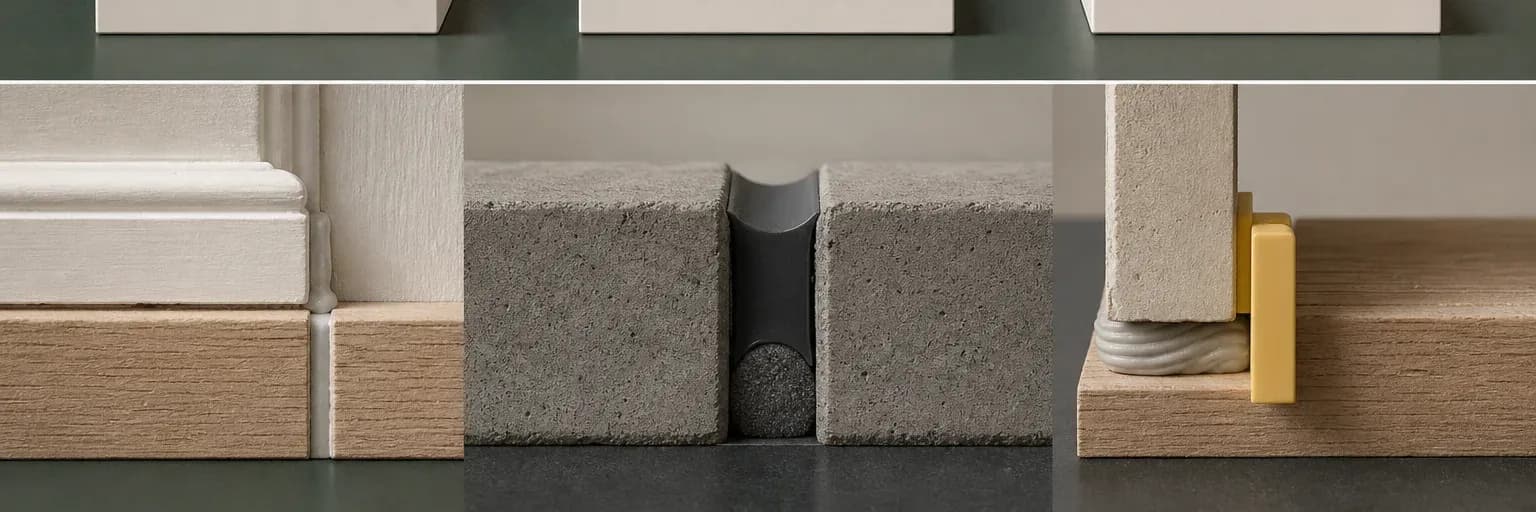
Detailed cross-sections of a paintable trim gap, weather movement joint and panel bonding bead
Geometry and force differ across the three functions: cosmetic filling, elastic sealing and load transfer need separate evidence.

Sealant keeps out air, water or dirt while allowing movement

A sealant forms a barrier at a joint or interface and is selected to accommodate the expected movement while maintaining adhesion. Silicone, polyurethane, hybrid and acrylic products can all be called sealants, but their movement, weather, water and substrate ranges differ. The term alone says nothing about structural glazing, fire performance, immersion or sanitary protection.

Joint width, depth, backing and two-sided adhesion help the material stretch and compress as intended. A deep plug or feathered smear can make a suitable product fail. Use the joint-design guide and the current TDS. Sealant is only one part of the detail; drainage, membranes, flashings and surrounding materials still have their own jobs.

State the barrier being maintained—rain, air, dust, wash water or another exposure—and the consequence if continuity is lost. That statement helps the designer decide whether sealant is primary, secondary or merely a finish, and what drainage or inspection must accompany it.

A movement joint needs two bonding faces

Adhesive transfers load between materials

An adhesive bonds parts so forces pass between them. Selection includes substrate area, load direction, surface preparation, bead or film geometry, cure and service environment. Initial grab can hold a light part during placement but is not the same as developed strength. Heavy, overhead or safety-critical components may need temporary or permanent mechanical support.

Pereseal does not currently offer an adhesive-sealant. Define what happens if a bond fails, then confirm allowable materials, support time, loading and exposure against the selected manufacturer’s current evidence. Contact the technical team if you need help separating a sealing task from a bonding task.

Document the component mass, service forces, bond area, orientation and temporary restraint before choosing the product. Include substrate coatings and cleaning because the bond is only as strong as the layer it grips. Escalate overhead, structural and injury-consequence bonds to the responsible designer.

Adhesive-sealant can perform two roles

Hybrid and polyurethane products may be marketed as adhesive-sealants because they can bond materials and remain flexible enough to seal selected joints. The same product can require different bead patterns, thickness and support depending on the role. A hidden bonding bead behind a panel is not gunned or inspected like a weather joint between panels.

Write the primary function in the method statement. If both sealing and bonding are essential, confirm that the detail lets the material do both without conflicting geometry or cure. A wide exposed fillet may not provide the bond area, while a compressed adhesive layer may not accommodate joint movement. Seek manufacturer/project guidance instead of assuming two marketing claims automatically combine.

Product type and chemistry answer different questions

Acrylic, silicone, polyurethane and hybrid identify material families; caulk, sealant and adhesive describe roles. Pair the two: paintable acrylic caulk, neutral-cure weatherproof silicone sealant, polyurethane construction sealant, hybrid adhesive-sealant. This produces a useful starting description but still does not specify a product or approve a substrate.

Compare silicone, PU and hybrid for family tendencies and acrylic vs silicone for common finishing/wet-weather choices. Then open the exact TDS/SDS. Avoid using regional vocabulary as if it were a technical standard; two suppliers may apply “caulk” to different formulations.

Record the exact product rather than stopping at the sealant type. Two neutral silicones or two hybrid sealants may have different movement classes, approved surfaces, cure times and approvals. Use the sealant type to narrow the options, then use the product TDS to make the final choice.

Movement, water and paint reveal a poor choice

A decorating caulk may accept paint but lack the elastic weather performance needed at an exterior frame. A silicone sealant may handle water and movement but reject conventional paint. An adhesive may hold a component but not be intended as a neat exposed sanitary bead. Choosing by the most familiar word moves these trade-offs out of sight until failure or finishing.

List the required outcomes and exclusions: paint, movement, water, UV, cleaning, load, rating and maintenance. If one product cannot satisfy them, change the detail or use separate compatible components. Do not stack products without compatibility evidence. A cosmetic top layer can conceal an unsuitable load-bearing or weather interface beneath it.

Read where the joint separated

Check the intended use in the product TDS

Match the product code, formulation and current document to the pack. Read intended uses with limitations, then check substrates, preparation, primer, dimensions, cure and service. The SDS handles hazards and storage; certificates or test reports cover specific evidence. A retailer category or cartridge front cannot replace these documents.

When asking Pereseal for guidance, describe both materials, the job, movement, environment and finish rather than asking only for “caulk” or “strong adhesive.” That information helps the team compare 702 and the current silicone range. Specialist and safety-critical work still needs the appropriate project approval.

Put the decision into a schedule that purchasing and installers can follow, including permitted alternatives and approval steps. If the required document is archived, contradictory or missing, mark the choice provisional. A clear unresolved item is safer than silently turning a broad category into a project specification.

Decision aid

Decide what the product needs to do

Fill a paintable interior finishing gap

Review an acrylic caulk/sealant and confirm movement, drying, paint compatibility and indoor exposure.

Maintain a barrier while the joint moves

Review a sealant whose specific movement, substrates, geometry and environment match the designed joint.

Transfer load between components

Review an adhesive with defined bond area, support, cure, load and failure consequence; do not rely on initial grab.

Need both bonding and sealing

Use a documented adhesive-sealant detail that reconciles both roles rather than assuming one bead shape does everything.

Evidence

Primary sources used

  1. ASTM C1193-25 — Standard Guide for Use of Joint SealantsASTM International

    General joint-design, substrate-preparation, backing, primer, installation, environmental and maintenance considerations; explicitly excludes structural glazing.

    Accessed 16 July 2026
  2. ISO 11600:2002 — Classification and requirements for sealantsInternational Organization for Standardization

    The principle that building sealants are classified by application and performance characteristics rather than by a generic chemistry name alone.

    Accessed 16 July 2026
  3. FAQ and technical bulletinsBostik Singapore

    General industry guidance on backing rods, joint dimensions, primers, paint cracking, inspection and sealant terminology; not evidence for Pereseal product performance.

    Accessed 16 July 2026

Next step

Describe the job and both surfaces

Use the application pages to turn a vague request for caulk or adhesive into a clear description of the job.

Choose by application

Relevant starting points

Products mentioned in this guide

These are selection starting points. Confirm suitability in current product documentation.

Performance acrylic

Pereseal 702 High Performance Acrylic Sealant

Product details
Neutral silicone

Pereseal N Weatherproof Neutral Seal Silicone

Product details

Keep learning

Related evidence-led guides